


How to Evaluate a Professional Hot & Cold Therapy Equipment Manufacturer
Choosing a supplier for recovery equipment is a big decision for distributors, wholesalers, and resellers. A low price may look attractive at first, but it does not always mean good value. For a growing B2B business, product quality, stable production, customization, delivery, and after-sales support all matter.
This is why buyers should carefully evaluate a hot cold therapy equipment manufacturer before placing a medium or large order. A professional factory should not only provide a good sample. It should also be able to keep the same product quality when the order grows.
The ERCON EK-810 Cold and Heat Contrast Compression Therapy Device is a useful example. It combines cold therapy, heat therapy, and pneumatic compression in one system. This type of multifunction equipment can serve sports recovery centers, physiotherapy clinics, rehabilitation facilities, sports teams, and other professional users.
Table of Contents
- 1. Why the Manufacturer Matters
- 2. Check the Technical Parameters
- 3. What the EK-810 Offers
- 4. Evaluate Temperature Control
- 5. Look at Compression Performance
- 6. Match the Equipment to the Application
- 7. Check Quality Control
- 8. Review OEM and Private Label Support
- 9. Check Production Capacity
- 10. Compare Sampling and Delivery
- 11. Review Certification and Factory Inspection
- 12. Why ERCON Can Support B2B Buyers
- 13. B2B Supplier Evaluation Checklist
- 14. Q&A
1. Why the Manufacturer Matters
For a distributor, the factory is part of the product. If the manufacturer has unstable production, weak quality control, or poor communication, the buyer may face problems later.
Common B2B problems include inconsistent product quality, delayed shipments, missing accessories, packaging errors, slow technical support, and difficulty making the same product again.
These issues can be especially difficult when a business starts to grow. A supplier may handle a small trial order, but the real question is whether the factory can support 100, 500, or more units with the same specifications.
A professional hot cold therapy equipment supplier should therefore be evaluated from both the product side and the factory side.
2. Check the Technical Parameters
B2B buyers should never select professional recovery equipment from photos alone. The technical specifications should be clear before the order is confirmed.
For hot and cold therapy equipment, buyers should check:
- Cold temperature range
- Heat temperature range
- Compression pressure range
- Water tank capacity
- Water circulation rate
- Cooling capacity
- Operating time
- Power supply
- Control method
- Available wraps and accessories
Clear specifications make it easier for wholesalers and resellers to compare different models and select the right product for their target market.
3. What the EK-810 Offers
The ERCON EK-810 is designed as a combined cold, heat, and compression therapy device. Instead of using separate equipment for each function, the system brings these functions together in one unit.
According to the product information, the EK-810 offers a cold temperature range of approximately 3–15°C and a heat range of approximately 40–55°C. Its listed water tank capacity is 2L, with a water flow rate of 370 ± 50 L/h.
The device also lists a 550W refrigeration capacity and an adjustable compression pressure range of 30–180 mmHg. The time setting is listed at 5–90 minutes.
| Feature | Listed Specification |
|---|---|
| Cold Temperature | 3–15°C |
| Heat Temperature | 40–55°C |
| Water Tank | 2L |
| Water Flow | 370 ± 50 L/h |
| Refrigeration Capacity | 550W |
| Compression Pressure | 30–180 mmHg |
| Time Setting | 5–90 minutes |
| Power Supply | 100–240V AC, 50/60Hz |
These specifications give distributors several product features to present when selling to professional recovery and rehabilitation customers.
4. Evaluate Temperature Control
Temperature control is one of the most important parts of a hot and cold therapy system.
A simple ice pack depends on melting ice, so the temperature can change during use. A circulating water system provides a different approach. It continuously moves water through the system and helps maintain the selected therapy temperature.
The EK-810 is designed for both cold and heat therapy. This makes it useful for businesses that want a contrast therapy solution rather than a cold-only product.
For distributors, this multifunction design can also make product positioning easier. The same equipment can be introduced to sports recovery businesses, physical therapy facilities, rehabilitation centers, and other professional users.
5. Look at Compression Performance
Temperature is only one part of the EK-810. The device also combines pneumatic compression.
The listed pressure range is 30–180 mmHg, giving users a wide adjustment range. The product information also describes adjustable compression settings and different operating modes.
For a rehabilitation equipment supplier, compression can be an important feature when serving customers who want a multifunction recovery system.
However, B2B buyers should always test the actual pressure performance of a sample before confirming a large order. The sample should be checked under normal operating conditions, and the final approved specification should be used as the production reference.
6. Match the Equipment to the Application
The best equipment is not simply the one with the most functions. It is the one that fits the customer's actual use.
Sports Teams
Sports teams may need recovery equipment after training, competitions, travel, running, cycling, or strength workouts.
For this market, distributors can focus on the combination of temperature therapy and compression, as well as adjustable settings and professional operation.
Physiotherapy Clinics
Physiotherapy clinics may serve customers with different recovery needs. A multifunction system can give the clinic more treatment options while using one main device.
Rehabilitation Centers
Rehabilitation facilities may need equipment that is easy to adjust and suitable for repeated use. Buyers should therefore check controls, accessories, durability, and technical support.
Sports Recovery Centers
Recovery centers can use hot and cold therapy as part of a wider recovery service. A combined system can help them offer different therapy options without purchasing several separate machines.
Distributors and Wholesalers
For distributors and wholesalers, product flexibility is also important. A multifunction product can be positioned for more than one customer group, which can make it a useful part of a wider recovery equipment range.
7. Check Quality Control
A professional factory should have a clear quality control process. Buyers should ask how the manufacturer checks products before, during, and after production.
For hot and cold therapy equipment, the inspection process should cover areas such as:
- Temperature performance
- Water circulation
- Compression pressure
- Water leakage
- Electrical performance
- Control functions
- Accessories
- Product appearance
- Packaging
- Final operation
The EK-810 product information highlights a high-sealing design intended to help reduce water leakage and a circulation system designed to maintain water flow.
For B2B buyers, it is important to verify these features during sample testing rather than relying only on a product description.
8. Review OEM and Private Label Support
Many distributors do not want to sell a completely generic recovery product. They want to build their own product identity.
This is where private label hot cold therapy equipment can be useful.
ERCON supports suitable OEM and ODM projects. Depending on the project, customization can include:
- Private label logo
- Product color
- Branded packaging
- Accessories
- Product presentation
Before bulk production, buyers should approve the final sample and confirm all branding details. This should include the logo artwork, colors, packaging, accessories, labels, product specifications, and other agreed requirements.
A clear approval process helps reduce mistakes when moving from sample orders to medium and large-volume purchasing.
9. Check Production Capacity
Factory capacity becomes more important as your business grows.
A supplier may produce 10 units without difficulty, but the same supplier may struggle with 500 units. This is why distributors should ask about factory size, production lines, equipment, R&D resources, quality teams, and previous export experience.
ERCON has more than 17 years of sports recovery equipment R&D and manufacturing experience. Its manufacturing background includes a 12,000-square-meter factory and 5 production lines.
The company also has an R&D and quality inspection team and a high-end product showroom.
For medium and large B2B buyers, these resources provide a stronger base for repeat orders and product customization.
10. Compare Sampling and Delivery
Before placing a large order, a buyer should have the opportunity to test the product.
ERCON supports 2-day sampling for suitable projects. A sample can help buyers check:
- Product functions
- Temperature control
- Compression performance
- Product materials
- Accessories
- Packaging
- Logo customization
- Overall user experience
ERCON also supports 7-day shipping under suitable project conditions. Actual lead time depends on the model, order quantity, customization, production schedule, and destination.
For large orders, buyers should always receive a confirmed production schedule before placing the purchase order.
11. Review Certification and Factory Inspection
Certification requirements can be different in each market. Buyers should confirm which documents are required for their target country and product configuration.
ERCON's background includes certifications and compliance resources such as CE, RoHS, and BSCI. Buyers should request the current documents that apply to the exact product before making compliance claims in their own market.
Factory inspection is another useful step for serious B2B buyers. ERCON supports factory inspection for qualified customers.
A factory visit can help buyers understand the production environment, quality control process, production capacity, and customization capability.
12. Why ERCON Can Support B2B Buyers
ERCON is positioned as a professional recovery equipment manufacturer with experience in product development and international B2B supply.
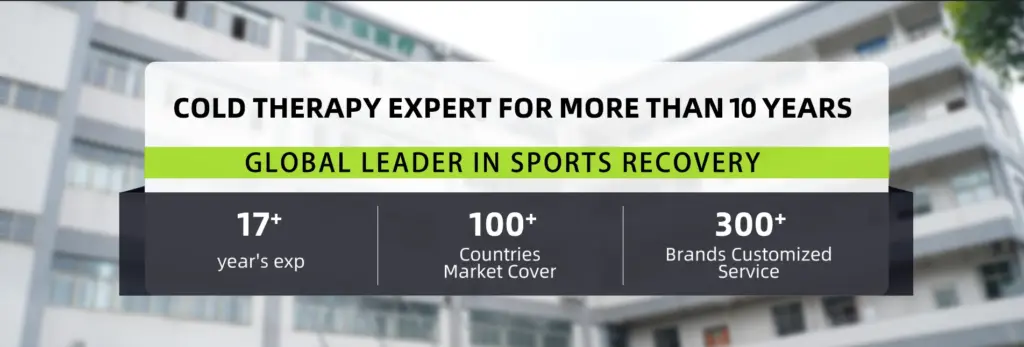
The company has more than 17 years of experience, products sold to more than 100 countries, and customization experience with more than 300 brands.
Its 12,000-square-meter factory, 5 production lines, R&D team, quality inspection team, and product showroom provide a manufacturing base for distributors, wholesalers, and resellers.
For businesses looking for a cryotherapy equipment wholesale partner, the EK-810 also provides a way to combine several recovery functions in one product.
For businesses that want a broader product line, ERCON can provide different recovery equipment and support a more complete recovery solution.
13. B2B Supplier Evaluation Checklist
Before choosing a manufacturer, distributors and wholesalers can use the following checklist:
| Evaluation Area | What to Check |
|---|---|
| Product Function | Does the machine meet the needs of your target customers? |
| Technical Data | Are temperature, pressure, water flow, and power specifications clear? |
| Sample Quality | Can you test the actual product before bulk production? |
| Customization | Can the factory provide logo, color, packaging, and accessory customization? |
| Quality Control | How does the factory inspect finished products? |
| Production Capacity | Can the factory handle repeat and large-volume orders? |
| MOQ | Does the minimum order quantity fit your purchasing plan? |
| Delivery | Can the manufacturer provide a clear production schedule? |
| Certification | Are the required compliance documents available? |
| Factory Inspection | Can qualified buyers visit or inspect the factory? |
| After-Sales | Is technical support available after shipment? |
| Long-Term Supply | Can the supplier support future product development and repeat orders? |
Do Not Choose a Manufacturer by Price Alone
For medium and large B2B orders, the lowest quotation is not always the best choice.
A better evaluation looks at the total supply picture. Product performance, factory capacity, quality control, customization, delivery, certification support, and after-sales service all affect the real value of a supplier.
A professional manufacturer should also be able to communicate clearly. If the supplier cannot explain basic product parameters, production capacity, MOQ, customization rules, or delivery schedules, buyers should be careful before placing a large order.
For distributors, wholesalers, and resellers, the goal is not simply to purchase a machine. The goal is to build a stable product line that can be supplied again when market demand increases.
Final Thoughts
Evaluating a professional hot and cold therapy equipment manufacturer requires more than checking a product photo or asking for the lowest price.
Start with the application. Then review the technical parameters, test a sample, check the manufacturing process, confirm customization, review the required certifications, and evaluate the factory's ability to support future orders.
The ERCON EK-810 shows why multifunction recovery equipment can be attractive to B2B buyers. Its listed specifications combine cold therapy, heat therapy, water circulation, and pneumatic compression in one system.
With 17 years of recovery equipment manufacturing experience, a 12,000-square-meter factory, 5 production lines, more than 100 export markets, and customization experience with more than 300 brands, ERCON can support distributors, wholesalers, resellers, and private label businesses that need a long-term manufacturing partner.
For buyers planning medium or large orders, the best approach is simple: test the product, verify the factory, confirm the specifications, and make sure the supplier can support your next order as well as your first one.
Q&A
Q1: What should I check when choosing a hot cold therapy equipment manufacturer?
Check product functions, technical parameters, sample quality, manufacturing capacity, quality control, customization, certifications, MOQ, delivery, factory inspection, and after-sales support.
Q2: What functions does the EK-810 combine?
The EK-810 combines cold therapy, heat therapy, and pneumatic compression in one recovery system.
Q3: What is the cold temperature range of the EK-810?
The listed cold temperature range is approximately 3–15°C. Buyers should confirm the final specification for their exact order.
Q4: What is the heat temperature range?
The listed heat range is approximately 40–55°C.
Q5: What is the compression pressure range?
The listed compression pressure range is 30–180 mmHg.
Q6: Can ERCON provide private label products?
Yes. ERCON supports suitable OEM and ODM projects, including private label logo, product color, packaging, and accessory customization.
Q7: Can wholesalers buy the EK-810 in bulk?
Yes. The product is suitable for B2B purchasing. Buyers should confirm the current MOQ, quotation, lead time, customization requirements, and shipping terms for their specific order.
Q8: Can I request a sample before placing a large order?
Yes. ERCON supports 2-day sampling for suitable projects. A sample should be tested and approved before bulk production.
Q9: Can B2B buyers inspect the ERCON factory?
Yes. ERCON supports factory inspection for qualified B2B buyers who want to review its production environment and manufacturing capabilities.
Q10: Who can use this equipment?
The equipment can be positioned for sports recovery centers, sports teams, physiotherapy clinics, rehabilitation facilities, chiropractic businesses, distributors, wholesalers, and selected home recovery markets.