


Where Can I Request a Cold Therapy Machine OEM Quote?
If you plan to sell cold therapy machines under your own brand, the first step is finding a factory that can meet your product, quantity, and customization needs. A good OEM quotation should tell you more than the price of one unit. It should explain which model you are buying, what is included, how customization works, and what the factory needs before production can begin.
For distributors, wholesalers, importers, and resellers, these details are especially important when planning a medium or large order. A clear quotation helps you compare suppliers, check product specifications, and avoid misunderstandings about packaging, accessories, or delivery.
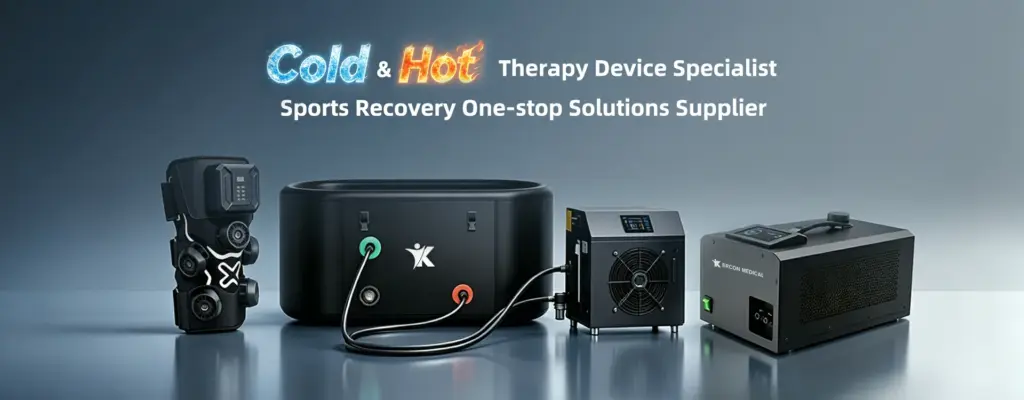
ERCON offers cold water therapy systems, cold compression machines, hot-and-cold contrast devices, and other sports recovery equipment. You can start with the ERCON cold therapy equipment range or visit its OEM and ODM manufacturing service page to review the available options.
- Where to Request an OEM Quote
- What Information Should Your Request Include?
- Choose a Machine Before You Set the Order Quantity
- Compare the Details Behind the Price
- Which Parts of the Product Can Be Customized?
- How to Review an OEM Quotation
- From Sample to Medium or Large Production Order
- How to Check the Manufacturer
- Questions and Answers
Where to Request an OEM Quote
The most direct route is to contact a cold therapy machine manufacturer that offers OEM or ODM services. Start with the manufacturer's product range, select the equipment types that match your target customers, and send a request with your expected quantity and brand requirements.
ERCON's product range includes several types of equipment, so buyers can compare options before deciding which models to include in an order:
- Cold water circulation systems: Designed to circulate chilled water through a connected therapy pad.
- Cold compression systems: Combine water-based cooling with pneumatic pressure.
- Hot-and-cold contrast devices: Offer different temperature settings, with additional functions available on selected models.
- Ice bath solutions: Provide another product category for recovery facilities and sports equipment suppliers.
If you already know the model you want, ask for a quotation for that specific product. If you are still comparing options, explain your target market and ask the factory to recommend suitable models. This gives the sales team a clearer starting point than a general request for the lowest price.
What Information Should Your Request Include?
A useful OEM quote request does not need to be long. It needs to answer the questions that affect price, production, and delivery.
| Information | What to Provide | Why It Matters |
|---|---|---|
| Product type | Cold water circulation, cold compression, contrast therapy, or ice bath | Helps the factory identify the right product family |
| Quantity | Sample quantity, planned first order, and possible repeat order | Allows the factory to check MOQ and volume pricing |
| Technical requirements | Temperature settings, pressure range, timer, pad type, and power supply | Reduces the risk of quoting the wrong model |
| Branding | Logo, color, packaging, labels, and manual language | Helps identify customization costs and lead time |
| Accessories | Required pads, wraps, hoses, chargers, and other included items | Makes the quoted package clear |
| Destination | Country, voltage, plug type, and relevant compliance needs | Helps the supplier review market requirements |
| Delivery plan | Target date, shipping destination, and preferred shipping method | Supports realistic production and shipping estimates |
Do not worry if you have not decided every detail. Mark the items that are still open and ask the manufacturer which options are available. It is better to clarify these points before approving a sample than to discover a mismatch after bulk production has started.
A Simple OEM Quote Request Template
Distributors and wholesalers can use the following checklist when contacting a factory. Add your own company details and remove any items that do not apply to your project.
- Product type or model: Insert model or required function
- Estimated quantity: Sample order and expected bulk quantity
- Target market: Country or region
- Brand requirements: Logo, color, packaging, and manual
- Accessories: Required pads, wraps, hoses, or other items
- Documents required: List relevant market requirements
- Delivery destination and target date: Insert details
- Requested quotation: Unit price, MOQ, sample cost, lead time, warranty, and shipping terms
This checklist helps both sides work from the same information and makes it easier to compare quotations from different manufacturers.
Choose a Machine Before You Set the Order Quantity
A large order is only useful when the selected product fits the customers you serve. Before discussing quantity, decide which equipment type belongs in your product range.
For Physiotherapy and Rehabilitation Equipment Suppliers
Buyers serving physiotherapy clinics may want a cold water system for pad-based cooling or a cold compression machine that combines cooling with adjustable pressure. The important details include pad compatibility, pressure settings, controls, cleaning instructions, and available technical documents.
The ERCON CL03B cold water compression system lists an 8L water capacity, a 0–150mmHg pressure range, and a flow rate of 370 ± 50L/h. Its timer can be set from 5 to 120 minutes. The product page also lists an MOQ of 10–50 sets and a 7–15 day lead time. Confirm the current terms and specifications with the factory before placing an order.
For Sports Equipment Wholesalers
Wholesalers serving gyms, sports clubs, and recovery centers may want more than one product type. A simple circulation system can meet one set of requirements, while a compression or contrast model can serve customers who need different functions.
Instead of ordering several models in large quantities at once, consider testing a small selection first. Compare the product operation, accessories, packaging, and customer feedback before deciding which models deserve a larger order.
For Resellers Seeking Compact Equipment
Some resellers prefer products that are portable and combine several functions. The ERCON CL806Pro combines cold, heat, and vibration functions. Its product information lists a 5000mAh battery, 42W power, a 45/60/120-minute timer, and a product weight of about 1.2kg.
These details can help buyers assess whether the product fits their market. Before requesting a quote, confirm the available settings, included accessories, charging requirements, and packaging for the exact version.
Compare the Details Behind the Price
Two quotations may look similar but cover different products or packages. One may include a standard pad and basic packaging, while another may include additional accessories or customized materials. Compare the full offer rather than the unit price alone.
Ask the manufacturer to confirm the following details in writing:
- Model and version: Make sure the quotation names the exact product and its current specifications.
- Included accessories: Check which pads, wraps, hoses, chargers, and other items come with each unit.
- Customization charges: Ask whether logo printing, color changes, packaging, or manual translation adds cost.
- Minimum order quantity: Confirm the MOQ for the standard product and for customized orders.
- Warranty: Ask what is covered, how long the warranty lasts, and how claims are handled.
- Production time: Confirm when the lead time begins and whether sample or artwork approval is required first.
- Shipping terms: Check the destination, shipping method, freight costs, and responsibility for import charges.
- Compliance documents: Request documents that apply to the exact model and destination market.
For a distributor planning repeat purchases, it is also useful to ask how the manufacturer records approved product versions. Keep the model number, technical datasheet, sample approval, and packaging files together. This gives both sides a clear reference for later orders.
Which Parts of the Product Can Be Customized?
OEM projects can range from adding a logo to developing a more detailed product package. The available options depend on the model, order quantity, materials, and production requirements.
ERCON supports OEM and ODM projects for suitable products. Depending on the model and project, customization may include:
- Private-label logo placement
- Available product color options
- Custom packaging and shipping cartons
- Accessories and pad selection
- Product labels and manual language
- Selected product appearance or development changes
Prepare your logo files, color references, packaging artwork, and language requirements before requesting the final quote. Ask which changes are possible for the selected model and whether they affect the MOQ, sample cost, or production schedule.
For a private-label cold therapy machine, sample approval is an important step. Check the product itself and the branded materials before authorizing bulk production. If any detail needs to change, record the revision and approve the updated version.
How to Review an OEM Quotation
When a quotation arrives, review it in three passes rather than looking at the total price first.
First, Check the Product
Confirm the model, technical specifications, functions, accessories, power supply, and included documents. If the supplier has suggested an alternative model, ask for a clear comparison with your original request.
Next, Check the Commercial Terms
Review unit price, MOQ, sample cost, payment terms, warranty, production lead time, and shipping conditions. Ask the supplier to separate optional customization charges from the standard product price.
Finally, Check the Approval Process
Confirm whether a sample is available, how artwork will be approved, which inspection points can be checked before shipment, and how product changes will be recorded. These details help prevent avoidable disputes when the order moves into production.
A quotation is not complete just because it includes a price. For medium and large orders, the product definition, package contents, and delivery terms should be clear enough for your purchasing team to approve.
From Sample to Medium or Large Production Order
A practical OEM project moves through a few clear stages. Each one gives the buyer a chance to confirm details before committing more resources.
- Stage 1 — Product selection: Identify the equipment type and model that fit your customers.
- Stage 2 — Quotation: Confirm the model, quantity, customization, accessories, price, and delivery terms.
- Stage 3 — Sample review: Check operation, materials, packaging, and documentation.
- Stage 4 — Final approval: Confirm the product specifications, logo, color, packaging, and inspection requirements.
- Stage 5 — Production and inspection: Agree on the production schedule and the checks to complete before shipment.
- Stage 6 — Shipping and repeat orders: Confirm shipping documents and keep the approved product record for future purchases.
ERCON states that two-day sampling and seven-day shipping may be available for selected projects. These timelines depend on the model, stock, customization work, order quantity, and destination. Ask for a written schedule for your own order before making commitments to your customers.
How to Check the Manufacturer
For a medium or large purchase, the factory should be able to answer questions about production, quality checks, customization, and after-sales support. A low quote is less useful if the supplier cannot clearly explain what will be delivered.
ERCON reports 17 years of sports recovery equipment R&D and manufacturing experience, products supplied to more than 100 countries, and over 300 brand customization projects. Its stated production setup includes a 12,000m² factory, five production lines, R&D staff, and quality inspection teams. Factory inspection can be discussed as part of the supplier review.
Before placing an order, request the current technical datasheet, user manual, warranty terms, and relevant compliance documents for the selected model. ERCON lists CE, ISO, RoHS, and BSCI-related credentials in its company information, but buyers should verify the current documents and confirm which ones apply to their product and destination market.
It is also worth discussing replacement parts, technical questions, and warranty handling before the first shipment. A supplier relationship should cover what happens after the equipment arrives, not only how the order is made.
To start your project, review the ERCON cold therapy machine range, select the models that match your market, and request a quotation with your estimated quantity and OEM requirements.
Questions and Answers
Where can I request a cold therapy machine OEM quote?
You can start from the ERCON cold therapy equipment category or its OEM and ODM service page. Share your product type, quantity, destination market, and customization requirements when requesting a quote.
What information is needed for a wholesale cold therapy machine quotation?
Provide the model or required functions, order quantity, destination country, branding needs, accessories, required documents, and target delivery date. If you are unsure about the model, explain your target customers and ask for suitable options.
Can ERCON support medium and large B2B orders?
ERCON works with distributors, wholesalers, resellers, importers, and private-label brands. Ask the factory to confirm MOQ, production capacity, lead time, and pricing for your specific quantity and selected models.
Can I customize the logo and packaging?
ERCON supports OEM and ODM projects for suitable models, with options that may include logo, color, packaging, and accessories. Confirm the available changes, MOQ, and sample approval process before production.
Can I test a sample before placing a bulk order?
Sample arrangements can be discussed with ERCON. Confirm the sample cost, preparation time, shipping charges, and whether the sample will match the version planned for mass production.
What should I check before approving the quote?
Check the model, technical specifications, accessories, price, MOQ, warranty, customization charges, compliance documents, lead time, shipping terms, and inspection plan. Make sure the final agreement is recorded in writing.
What is the difference between OEM and ODM?
OEM usually means producing a product to an agreed specification, often with the buyer's branding. ODM generally includes more manufacturer support with product design or development. Confirm the exact scope of service with the factory before starting the project.